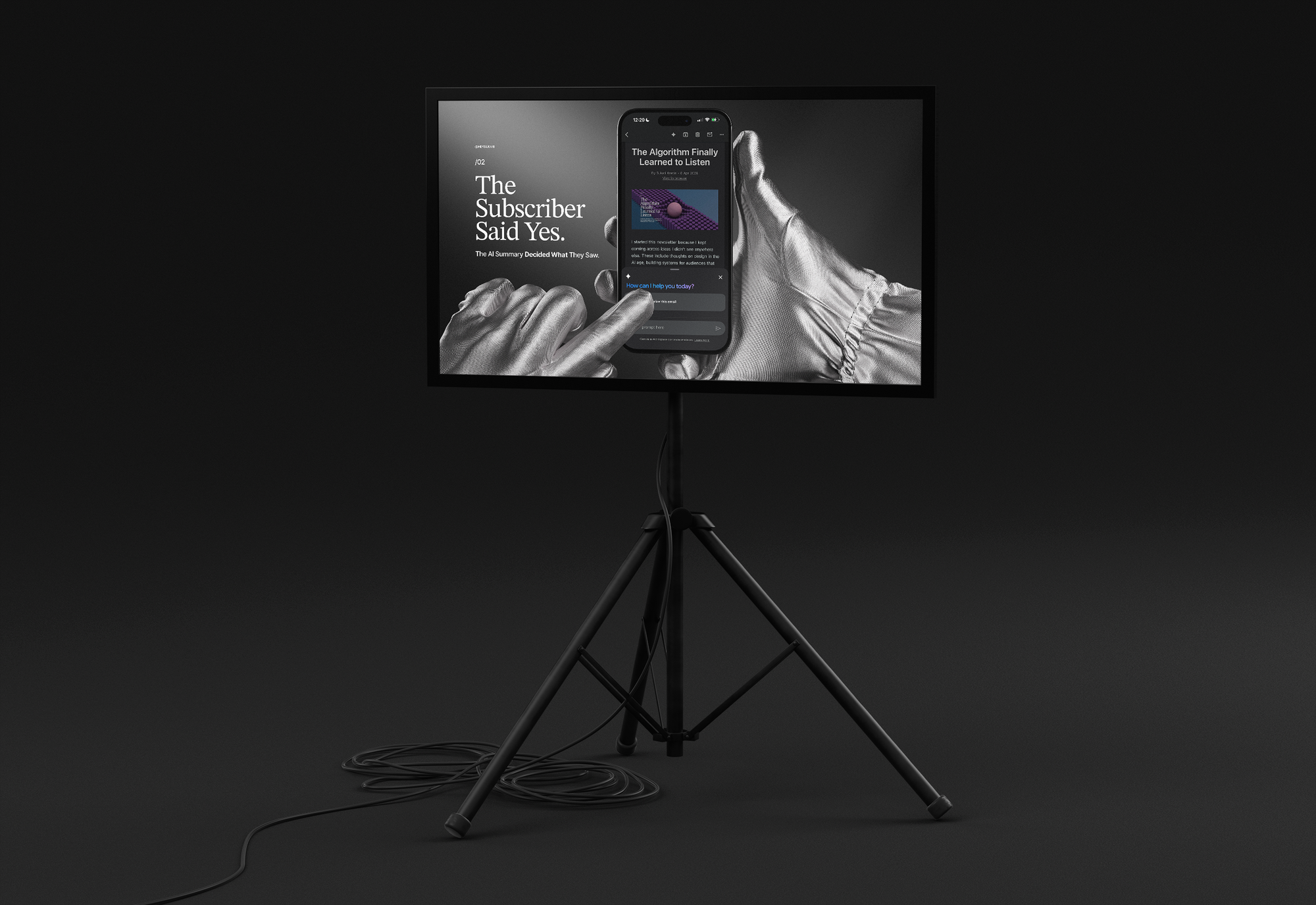

Something I've been sitting with since last month at Unpacked 2026, Customer.io's online conference, where Action Rocket delivered a presentation on AI summaries in email clients. Their findings were specific, practical, and worth sitting with.
It connects directly to what I wrote in my last post: "Designers who know how to build for what users say they want, not just what they do, will shape what comes next."
The question is: are we designing for the people who are actually reading our emails first?
A new reader entered the inbox. Nobody told the design team.
In 1999, Seth Godin wrote Permission Marketing: Turning Strangers into Friends and Friends into Customers and changed how the industry thought about the inbox. His argument was that communications that are anticipated, personal, and relevant, delivered only to people who raised their hands, would outperform anything built on interruption.
The opt-in always had something quietly romantic about it. Think of the scene in Notting Hill where Anna Scott (played by Julia Roberts) stands in front of William Thacker (played by Hugh Grant) and says she's just a girl asking a boy to love her. The subscriber, in that moment, is Anna. Standing in front of the brand. Saying: I'm just a person, asking you to be worth my time.
For years, that opt-in was the foundation of the relationship between brand and subscriber.
Here's what nobody planned for.
The subscriber opted in. But before they ever read your email, an AI summary reads it first and decides what to show them.